

YOUR HOME SOLD GUARANTEED OR WE'LL BUY IT!*





Vancouver and Toronto Housing Markets See Sharpest Global Declines in 2026
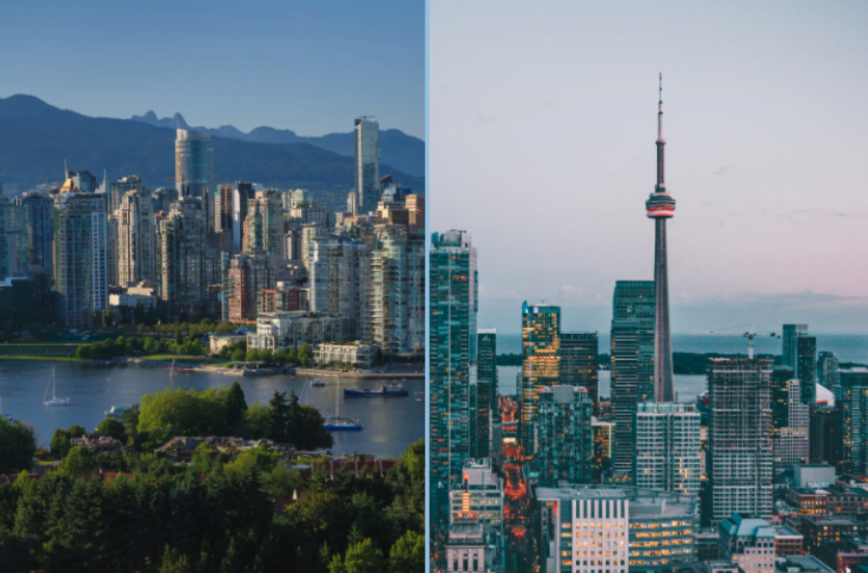
Toronto and Vancouver were identified as the two weakest housing markets internationally in 2026, according to a global real estate report released Tuesday. Despite being among the weakest-performing markets, both cities were classified as facing a “moderate” risk of a housing bubble. Inflation-adjusted home prices in both cities fell by about 10 per cent year over year, while prices across the other major global cities analyzed increased by roughly 0.5 per cent on average.
The decline marks a major reversal from the strong growth Toronto and Vancouver experienced during the previous decade. Between 2014 and 2022, Toronto was one of the strongest-performing markets analyzed, but prices have since fallen about 30 per cent from their peak. Vancouver prices have declined roughly 20 per cent since reaching their peak in 2022. Despite these drops, housing in both cities remains expensive compared with many other markets internationally.
Current benchmark prices remain high, with homes in the Greater Toronto Area around $930,000 and those in Metro Vancouver around $1.08 million. However, when measured against average incomes, both cities can appear relatively more affordable than some other major international centres. The report found that Toronto ranked at the lower end of its price-to-income measure, while Vancouver required roughly five years of average income to purchase a typical 650-square-foot apartment, compared with more than a decade in some other cities.
Housing prices began to level off after the buying surge during the COVID-19 pandemic. Rising costs also encouraged some residents to move to other cities, contributing to stronger price growth elsewhere. More recently, economic uncertainty has made buyers more cautious about major investments. The condominium sector has been particularly weak, with resale benchmark condo prices in the Greater Toronto Area falling 10 per cent year over year in the first quarter of 2026. Prices are not expected to begin rising again until 2028, with projections suggesting they could ultimately fall 25 to 30 per cent from their early-2022 peak.
Looking ahead, analysts do not expect a drastic decline in home prices in either city in the near term, although international economic conditions could change that outlook. Both markets are considered to have a moderate level of housing-bubble risk, down from elevated levels recorded in 2024. A major concern is housing supply: Toronto would need to increase annual housing construction by at least 50 per cent over the next decade to restore affordability to pre-pandemic levels. If economic growth strengthens while construction remains insufficient, renewed upward pressure on prices could eventually create conditions for another housing bubble.